Libido is commonly reduced to desire—an urge, a feeling, or an emotional state. Popular culture frames it as something psychological or relational, something that should appear naturally when attraction and connection are present. When libido fades, the instinctive response is often to search for emotional or interpersonal explanations.
This narrow framing overlooks a fundamental truth: libido is not just desire. It is a biological outcome. It reflects how well the body is functioning internally and how safe, nourished, and supported it feels at any given time.
Understanding libido through a nutrition-first perspective allows desire to be viewed not as something to force or fix, but as something that emerges when internal systems are aligned.
Libido as a Readiness Signal
From a physiological standpoint, libido represents readiness. It signals that the body has sufficient energy, hormonal balance, neurological stability, and emotional capacity for intimacy. When these conditions are met, desire often arises without effort.
When they are not, libido tends to decline quietly. This is not dysfunction. It is prioritization.
The body continuously evaluates where to allocate resources. Functions essential for survival—breathing, circulation, immune defense, stress regulation—take precedence. Pleasure, reproduction, and intimacy are optional from a survival perspective and are therefore sensitive to internal imbalance (Sapolsky, 2004).
Why Desire Cannot Be Separated from Physiology
Desire is often treated as a purely mental phenomenon, but the brain itself is a metabolic organ. Every thought, emotion, and sensation relies on nutrients, oxygen, and energy.
Neurotransmitters involved in desire—dopamine, serotonin, oxytocin—are synthesized from dietary precursors and regulated by micronutrients (Kennedy, 2016). Blood flow, nerve signaling, and hormonal communication all depend on nutritional adequacy.
When nutrition is inconsistent or insufficient, desire becomes unreliable—not because attraction disappears, but because the biological foundation that supports desire weakens.
The Energy Cost of Libido
Libido is energetically expensive. It requires surplus energy beyond what is needed for basic functioning. When energy availability is low—due to restrictive eating, irregular meals, chronic stress, or poor sleep—the body conserves resources.
Research in evolutionary biology shows that reproductive behaviors decline under conditions of perceived scarcity (Wade & Schneider, 1992). Modern scarcity is rarely famine-based, but the body responds similarly to psychological stress, sleep deprivation, and nutrient deficiency.
This explains why libido often decreases during periods of overwork, burnout, or lifestyle imbalance.
Nutrition as a Foundational Signal of Safety
Food does more than provide calories. It signals safety to the nervous system. Regular meals, nutrient diversity, and sensory enjoyment communicate that resources are available and stable.
When meals are skipped, highly processed, or nutritionally sparse, the body receives mixed signals. Even if caloric intake is sufficient, micronutrient gaps can impair metabolic efficiency and hormonal communication (Gropper & Smith, 2021).
Over time, this can influence libido subtly—often without conscious awareness.
Hormones Are Messengers, Not Drivers
Hormones are often blamed for low libido, yet hormones do not act independently. They respond to internal conditions.
Sex hormones interact with stress hormones, thyroid hormones, and metabolic signals. When cortisol remains elevated due to chronic stress, reproductive hormones are deprioritized (Chrousos, 2009).
In this context, low libido is not a hormonal failure. It is a hormonal response.
The Nervous System’s Role in Desire
Libido requires a relaxed nervous system. The parasympathetic branch—the rest-and-digest state—supports arousal, sensitivity, and connection.
Chronic stress keeps the body in a sympathetic state, optimized for alertness rather than intimacy. Nutrition influences this balance through micronutrients that support nervous system regulation (Barbagallo & Dominguez, 2010).
When the nervous system struggles to downshift, desire often feels distant.
Why Libido Is Often Misunderstood
Because libido is framed culturally as emotional or relational, biological contributors are frequently overlooked. Individuals may blame themselves or their partners, creating additional stress that further suppresses desire.
Pressure replaces presence. Effort replaces ease.
A Modern Perspective on Intimacy
Modern life places unprecedented demands on attention, energy, and emotional regulation. Expecting libido to remain unaffected by these pressures is unrealistic.
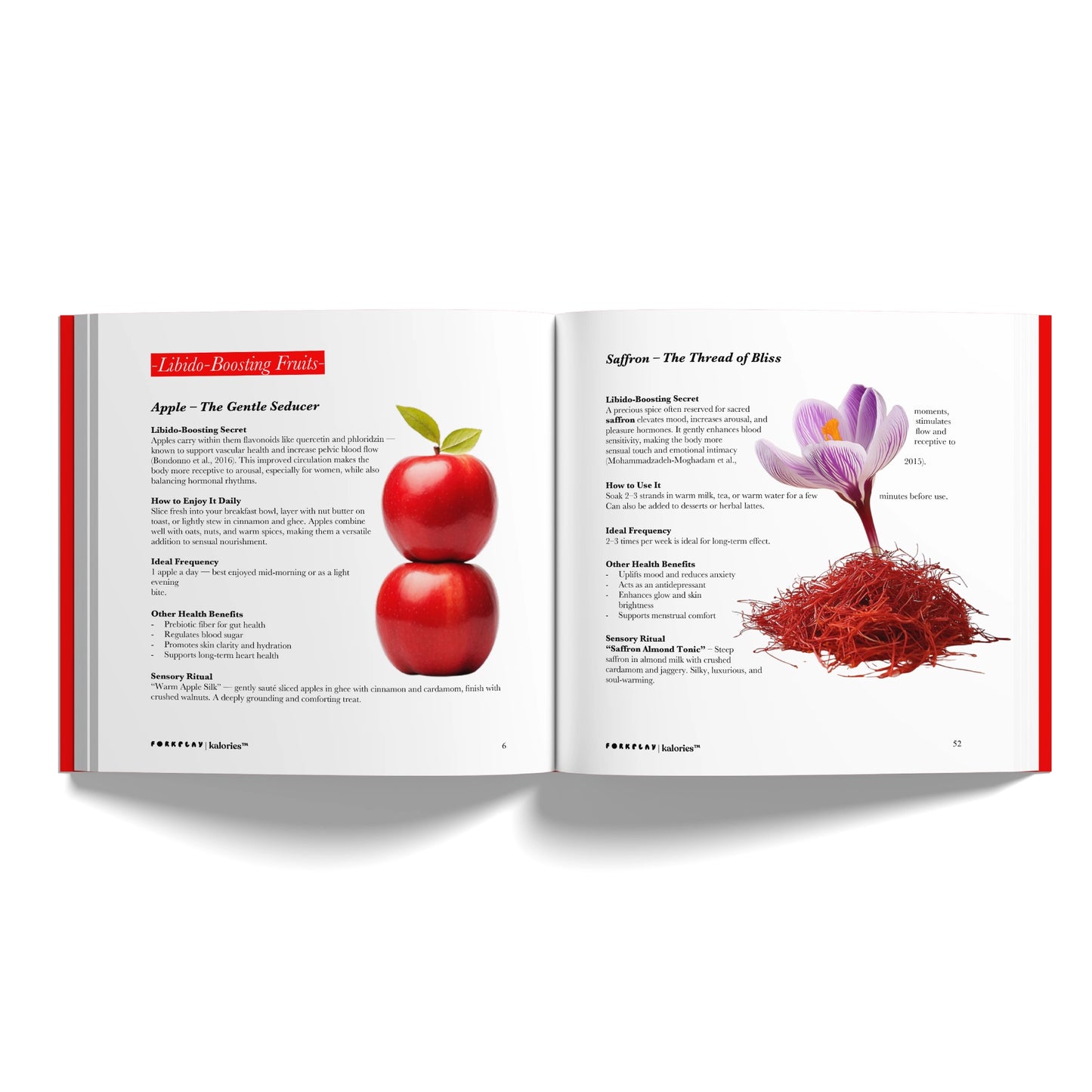
Insights explored in Forkplay emphasize this reality, presenting intimacy as an extension of overall wellness rather than a separate domain.
The Role of Functional Nutrition
Functional nutrition focuses on consistency rather than intensity. It supports daily nourishment through accessible, enjoyable formats rather than clinical intervention.
Kalories operates within this philosophy, positioning intimacy wellness as part of everyday nutrition rather than something that requires correction or medication.
Reframing Desire for Long-Term Wellbeing
When libido is understood as a biological outcome, frustration gives way to curiosity. Instead of asking what is wrong, the question becomes what the body needs.
Often, the answer is not stimulation, but support.
Final Reflection
Libido is not just desire. It is the body’s response to nourishment, safety, balance, and energy availability.
When these foundations are strong, desire tends to emerge naturally. When they are compromised, libido fades—not as failure, but as communication.
Disclaimer
This article is intended for informational and educational purposes only. It does not provide medical advice, diagnosis, or treatment. Individual responses vary based on health status, lifestyle, and biology. Readers are encouraged to consult qualified healthcare professionals before making dietary or lifestyle changes related to sexual wellness.
References
Barbagallo, M., & Dominguez, L. J. (2010). Magnesium and aging. Current Pharmaceutical Design, 16(7), 832–839. https://doi.org/10.2174/138161210790883679
Chrousos, G. P. (2009). Stress and disorders of the stress system. Nature Reviews Endocrinology, 5(7), 374–381. https://doi.org/10.1038/nrendo.2009.106
Gropper, S. S., & Smith, J. L. (2021). Advanced nutrition and human metabolism (7th ed.). Cengage Learning.
Kennedy, D. O. (2016). B vitamins and the brain. Nutrients, 8(2), 68. https://doi.org/10.3390/nu8020068
Sapolsky, R. M. (2004). Why zebras don’t get ulcers (3rd ed.). Holt Paperbacks.
Wade, G. N., & Schneider, J. E. (1992). Metabolic fuels and reproduction. Neuroscience & Biobehavioral Reviews, 16(2), 235–272. https://doi.org/10.1016/S0149-7634(05)80183-6