Sexual health is often framed through the lens of hormones, desire, or emotional connection. While these elements are important, they sit on top of a quieter and more fundamental layer: micronutrition. Vitamins and minerals do not generate desire on their own, yet without them, the biological systems that support libido, arousal, mood, and physical responsiveness struggle to function efficiently.
Understanding sexual health through vitamins and minerals requires a shift in perspective. Libido is not driven by isolated triggers. It is the outcome of multiple systems—endocrine, neurological, and cardiovascular—working in harmony. Micronutrients act as the enablers of this harmony.
Micronutrients as the Infrastructure of Sexual Health
Unlike macronutrients such as carbohydrates, proteins, and fats, micronutrients are required in small amounts. This makes their importance easy to underestimate. Vitamins and minerals function primarily as cofactors, meaning they enable enzymes and biochemical reactions to occur. Without them, processes related to hormone synthesis, nerve signaling, neurotransmitter production, and blood flow regulation slow down or become less efficient (Gropper & Smith, 2021).
Sexual health depends on all of these processes simultaneously. Because libido is not essential for immediate survival, the body deprioritizes it when resources are limited. As a result, micronutrient insufficiency often manifests first as low energy, low motivation, emotional flatness, or reduced sexual interest.
Zinc and Hormonal Signaling
Zinc is one of the most studied minerals in relation to sexual health. It plays a role in hormone metabolism, gene expression, and cellular communication. Rather than acting as a stimulant, zinc supports the body’s ability to produce and respond to sex hormones effectively (Prasad, 2014).
Research indicates that zinc influences receptor sensitivity, meaning it affects how well hormonal signals are received at the cellular level. When zinc intake is consistently low, hormone levels may remain within normal ranges, but their impact can feel diminished.
Zinc is also involved in immune regulation and stress response. Chronic stress increases zinc utilization, making insufficiency more likely in modern lifestyles characterized by high psychological load (Maares & Haase, 2016).
Magnesium and Nervous System Regulation
Magnesium plays a central role in neuromuscular relaxation, nerve transmission, and vascular function. These processes are essential for physical comfort, sensitivity, and relaxation during intimacy. Magnesium supports the parasympathetic nervous system—the branch responsible for rest, recovery, and arousal (Barbagallo & Dominguez, 2010).
Modern dietary patterns often fall short of recommended magnesium intake. Refined grains, processed foods, caffeine consumption, and chronic stress all contribute to depletion. Even marginal insufficiency can lead to heightened nervous system tension.
B Vitamins and Neurochemical Balance
B-complex vitamins—including B6, folate, and B12—are critical for energy metabolism and neurotransmitter synthesis. Dopamine, serotonin, and norepinephrine rely on B vitamins for their production and regulation (Kennedy, 2016).
When B-vitamin intake is inadequate, fatigue and emotional blunting often appear together. Libido, which depends on both physical energy and emotional engagement, frequently declines alongside them.
Iron, Oxygen Transport, and Vitality
Iron supports hemoglobin production and oxygen transport throughout the body. Adequate oxygen delivery is essential for cellular energy production and tissue function (Beard & Tobin, 2000).
Sexual interest often mirrors overall vitality. When stamina is low, desire tends to follow. Mild iron insufficiency may not produce obvious symptoms, yet it can influence energy levels and physical responsiveness subtly.
Vitamin D and Hormonal Modulation
Vitamin D functions more like a hormone than a traditional vitamin. It influences gene expression, immune regulation, and endocrine signaling. Low vitamin D status is associated with fatigue, mood changes, and hormonal inefficiency (Pilz et al., 2018).
Why Micronutrient Gaps Are Often Missed
Modern diets often provide sufficient calories but limited nutrient density. Ultra-processed foods meet energy needs while falling short on vitamins and minerals (Monteiro et al., 2019). Because symptoms develop gradually, they are frequently attributed to stress or aging rather than nutrition.
Nutrition as Long-Term Support
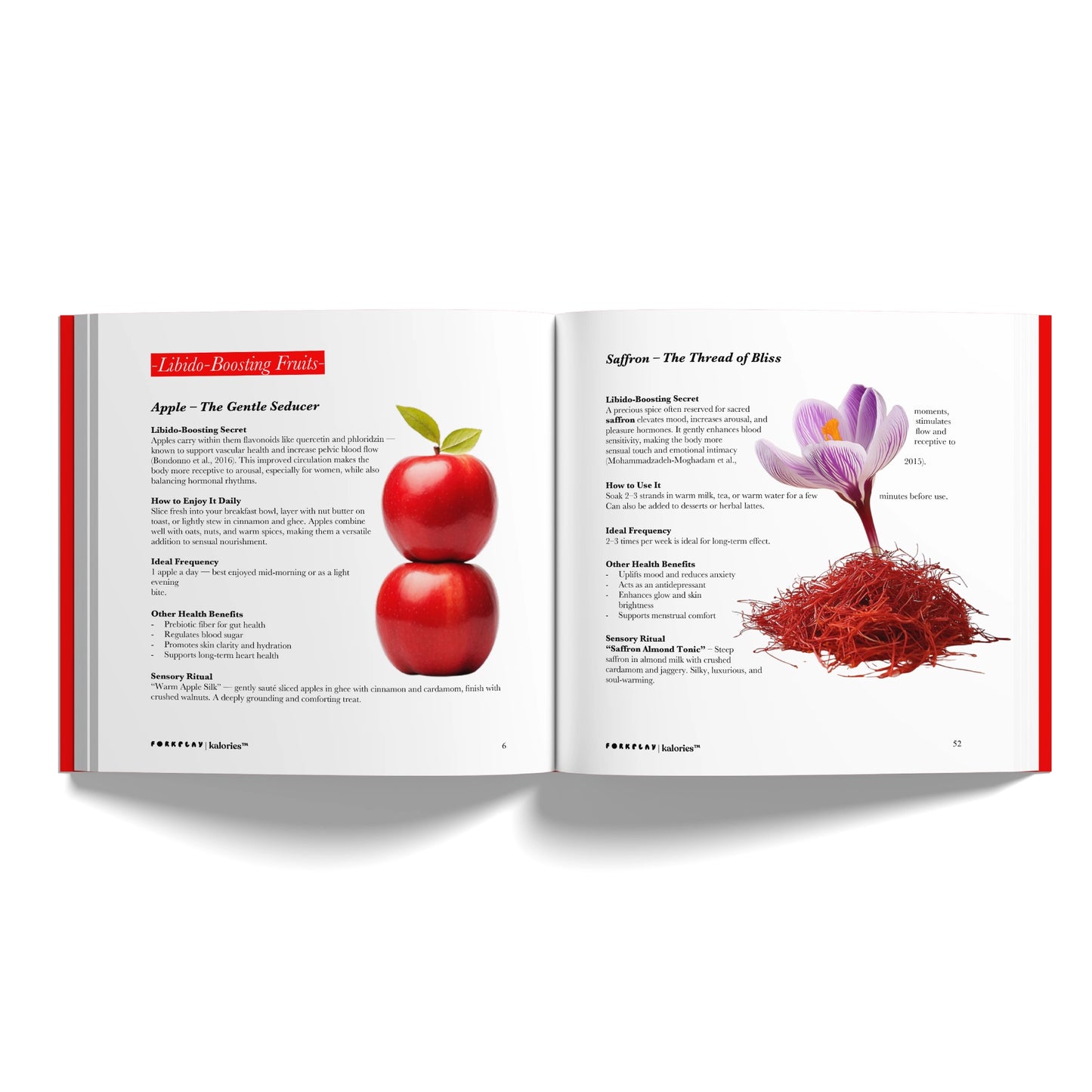
Supporting sexual health through vitamins and minerals is not about short-term intervention. It is about consistency over time. This nutrition-first approach aligns with insights explored in Forkplay, which frames intimacy as an outcome of internal balance rather than stimulation.
Functional foods can complement whole-food diets by supporting nutrient consistency and enjoyment. Kalories approaches this space with a focus on nourishment, not medicalization.
Final Reflection
Vitamins and minerals quietly regulate sexual health by enabling the systems that support desire, mood, and physical responsiveness. When these foundations are strong, libido feels natural and sustainable. When they are neglected, desire fades—not as failure, but as feedback.
Disclaimer
This article is intended for informational and educational purposes only. It does not provide medical advice, diagnosis, or treatment. Individual responses vary based on health status and lifestyle. Readers should consult qualified healthcare professionals before making dietary changes related to sexual wellness.
References
Barbagallo, M., & Dominguez, L. J. (2010). Magnesium and aging. Current Pharmaceutical Design, 16(7), 832–839. https://doi.org/10.2174/138161210790883679
Beard, J. L., & Tobin, B. W. (2000). Iron status and exercise. The American Journal of Clinical Nutrition, 72(2), 594S–597S. https://doi.org/10.1093/ajcn/72.2.594S
Gropper, S. S., & Smith, J. L. (2021). Advanced nutrition and human metabolism (7th ed.). Cengage Learning.
Kennedy, D. O. (2016). B vitamins and the brain. Nutrients, 8(2), 68. https://doi.org/10.3390/nu8020068
Maares, M., & Haase, H. (2016). Zinc and immunity. Archives of Biochemistry and Biophysics, 611, 58–65. https://doi.org/10.1016/j.abb.2016.03.022
Monteiro, C. A., et al. (2019). Ultra-processed foods. Public Health Nutrition, 22(5), 936–941. https://doi.org/10.1017/S1368980018003762
Pilz, S., et al. (2018). Vitamin D testing and treatment. Endocrine Connections, 7(3), R54–R69. https://doi.org/10.1530/EC-18-0036
Prasad, A. S. (2014). Zinc as an antioxidant. Frontiers in Nutrition, 1, 14. https://doi.org/10.3389/fnut.2014.00014